Operator Notes
Product Quality Is Your Brand: A Buyer's Take on Novomatic, Board Games, and the Details Players Remember
I'll say it plainly: in the entertainment equipment business, the product is the brand. The logo on the door doesn't matter if the buttons on the slot cabinet feel cheap, the board game pieces look worn, or the card table wobbles. Quality perception starts with the first touch. That's not a marketing slogan. It's purchasing logic.
What I actually do
I'm an office administrator for a 120-person entertainment company. I manage all equipment purchasing—roughly $480,000 a year across seven vendors. I report to operations and finance, which means I hear it from both sides: operations wants things that work; finance wants things that cost less. My job is to find the intersection.
I took over purchasing in 2022. Since then I've ordered slot cabinets, casino game upgrades, fitness units, board games, and video game peripherals. My experience is based on four venues in one regional chain. If you're a single arcade or a 2,000-machine casino, your experience might differ. I'm not a game designer or a casino operations expert, so I can't speak to payout math or game certification. What I can tell you from a procurement perspective is how quality decisions show up in maintenance logs and customer comments.
Quality shows up in player behavior
In 2023, we replaced a row of older cabinets with new Novomatic casino slots. The game themes were similar. The visible difference was hardware quality. Brighter displays. Solid button decks. No flicker. Faster card readers. Did players comment? Not in technical language. They said things like this one feels newer and I trust this machine more. A player can't define trust in a slot cabinet, but they can feel it. That's the first thing I learned about brand perception: reliability is a brand attribute. A cabinet that freezes for five seconds gets remembered. A game that crashes once gets mentioned.
The same pattern carries online. When someone opens a casino online Novomatic title, the first impression is not the game math. It's whether the lobby loads cleanly, whether the game runs smoothly, and whether the interface feels solid. We ran a small player feedback survey in early 2024. The top complaint wasn't game selection. It was lag and clunky navigation. Nobody blamed the software studio. They blamed the platform. From a buyer's perspective, that tells me the digital product quality is just as visible as the physical cabinet.
Physical quality is the same story
Board games were a harder sell for me. I used to think a board game is a board game, so why spend extra on a nicer version? Then we introduced a Hero Quest board game set in a family lounge. I almost bought a cheaper clone. I didn't, because the client requested the original. The difference showed the first time someone opened the box: thick cardboard tiles, detailed miniatures, a rulebook that didn't look like a photocopy. People took photos. They asked where to buy it. A stranger who sat down to look ended up staying for an hour.
A video game designer I worked with on a site renovation explained it this way:
The first ten seconds of a game decide whether a player stays.
The same is true for physical entertainment. The weight of a joystick, the click of a button, the finish on a card table—all of that is the first ten seconds. If it feels cheap, the rest of the experience doesn't get a chance.
Even the simplest games benefit. We printed laminated guides for a retro card table, including a sheet that said How to Play Old Maid Card Game at the top. It cost maybe forty dollars. Sounds small. It kinda isn't. Attendance at that table nearly doubled. Was it because everyone suddenly needed to know Old Maid? No. It was because the table looked cared for. Someone had thought about the player experience. That's the definition of brand.
The cheapest option usually isn't
I used to buy based on the lowest quote. Not anymore. Total cost of ownership includes base price, setup fees, shipping, maintenance, replacement parts, and the hidden cost of a machine being down at 7pm on a Saturday. The lowest quoted price rarely wins once you add those up. Speed, quality, price. Pick two. In our case, quality and speed have been the non-negotiables.
I've watched online printers like 48 Hour Print build a reputation on guaranteed turnaround rather than the absolute lowest price. For event materials, knowing your deadline will be met is worth more than a lower price with estimated delivery. Same logic applies to a slot cabinet or a board game table. Certainty is value. A vendor that delivers a working product on time creates a better brand outcome than one that saves you $300 and shows up two weeks late.
According to the American Gaming Association (americangaming.org), commercial casino gaming revenue in the U.S. reached $66.5 billion in 2023. At that scale, the it's just a machine argument doesn't hold. Operators who treat equipment as a brand investment are the ones who get repeat visits.
But what about budget? Yes, budget exists.
I know what you're thinking: easy for you to say—you don't have to justify every dollar to the finance committee. I do. The question is not whether to spend on quality. It's where to spend it. A premium cabinet in a high-traffic area pays for itself. A premium carpet does not. I'm not saying buy the most expensive option for everything. I'm saying buy the quality that your customers actually touch, and save somewhere else.
We standardized our equipment specs across fewer vendors for that reason. With Novomatic, for example, we know what the hardware spec means because we've seen it work in multiple venues. The most frustrating part of equipment buying is the same issue recurring despite clear specs. You'd think a written requirement would prevent misunderstandings, but interpretation varies wildly. Fewer vendors means fewer interpretations.
I'd say that standardization saved us about $18,000 in the first year—or rather, closer to $22,000 once you count the service calls we avoided. Oh, and the side effect: maintenance requests dropped by about 30%. There's something satisfying about seeing a new game table draw a crowd. After the budget meetings and the delivery delays, that's the payoff.
Quality is the message
I'll end where I started: the product is the brand. When you choose Novomatic casino slots, you're buying a consistent physical and digital experience. When you choose a Hero Quest board game over a clone, you're buying the tactile proof that your venue respects its guests. When you put How to Play Old Maid Card Game on a table, you're buying approachability. These are all brand investments.
I do not mean every purchase has to be premium. I mean every purchase has to pass a simple test: would I want a customer to judge our company by this object? If the answer is no, the price was probably too high. If the answer is yes, someone will notice the difference. That someone is your next regular.
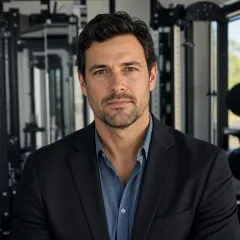
Marcus Feldman
Marcus Feldman is a commercial strength-equipment analyst covering selectorized machines, plate-loaded stations, Smith machines, functional trainers, power racks, benches, barbells, dumbbells, and cable systems. He applies ISO 20957-1 and ISO 20957-2 while comparing rated loads, stability, frame deflection, pulley ratios, cable travel, adjustment increments, guarding, entrapment points, fastener retention, and fatigue cycles. His guides help gym operators, coaches, facility planners, and procurement teams evaluate biomechanics, user capacity, floor layout, maintenance access, durability, and lifecycle value.