Operator Notes
Novomatic vs. The Niche Specialist: A Buyer's Take on Indoor Entertainment Equipment
The Problem With One-Stop Shops (and Specialists)
I’ve managed purchasing for our entertainment center since 2021. We’ve got a mix: a small casino area, a fitness studio, and a lounge with board games and old-school arcade cabinets. So when it came time to refresh our equipment, my first instinct was to find a single source to simplify the ordering. That’s when Novomatic came on my radar.
The initial pitch was compelling—one vendor for slot machines, rowing machines, and even a few board games. But as I started comparing quotes, I hit the same question every admin buyer faces: is a broad supplier like Novomatic a better deal than going with niche specialists for each category?
Let me be clear: this isn't a review. This is a breakdown of how I compared them, driven by total cost of ownership (TCO), because the sticker price rarely tells the whole story.
Dimension 1: Product Range vs. Product Depth
Novomatic’s Breadth
Novomatic’s catalog covers a lot of ground. You can get a Novomatic slot demo machine for the casino floor, a commercial rowing machine for the gym, and a table for Everdell board game nights. The appeal is obvious: one purchase order, one vendor relationship. That saves my accounting team time—roughly 4 hours a month, I’d estimate. The invoices are consistent, which means fewer rejected expense reports.
I ordered a Novomatic online casino terminal for our VIP room. Setup was straightforward. Their installation crew showed up on time (rare in this industry), and the hardware was compatible with our existing back-end system. So far, so good.
The Specialist’s Depth
Now, contrast that with a specialist. For our rowing machines, I compared Novomatic’s model to one from a dedicated fitness equipment vendor. The specialist’s unit had better warranty terms (3 years vs. Novomatic’s 1 year for moving parts) and lower projected maintenance costs.
I only believed the value of specialist knowledge after ignoring it once. We bought a cheaper, all-in-one cardio unit from a broad-line supplier (circa 2023). The total cost of ownership? $800 more after repairs and downtime. My gut told me to go with the specialist. The numbers said the broad supplier was cheaper. My gut was right.
Verdict: If you need a one-off item, the specialist often wins on TCO. Novomatic wins when you need integrated solutions and streamlined ops.
Dimension 2: Software & Compatibility
Novomatic’s Ecosystem
One thing that surprised me: Novomatic isn't just hardware. Their app ecosystem for managing multiple devices is decent. For a casino, the Novomatic online casino integration with their slot machines is seamless. You can manage free spins, bonuses, and player tracking from a central dashboard. That kind of software integration saves time. I calculate that it saves our floor manager about 6 hours a week compared to juggling three different admin portals (not that I’m bitter about the old system).
The Specialist’s APIs
Specialists, especially in the fitness and gaming niches, often rely on third-party software. Their rowing machine might have a good API, but it won't talk to your casino management system. For our small operation, that meant manual data entry—a hidden cost I initially missed.
Industry standard connectivity is still catching up here. Many devices use proprietary protocols, which adds friction if you're trying to build a unified experience. Novomatic’s advantage is that they control more of the stack.
Verdict: For multi-use facilities, Novomatic’s software integration is a real TCO reducer. For a single-use facility (just a gym or just a casino), the specialist’s software is often more advanced.
Dimension 3: The 'Surprise' Cost—Inventory & Turnover
Here’s the dimension where the conventional wisdom flipped for me. Everyone talks about purchase price and maintenance. No one talks about the cost of stale inventory—especially for board games and card games.
Board Games & Card Games
We stock Everdell board game and card game golf sets. They’re popular, but they go out of style or get damaged. Specialists in tabletop games often have a huge selection, but their turnover can be slow. You end up paying for storage and eventual write-offs.
Novomatic, in my experience, rotates their catalog more aggressively. Their board game section was smaller but turned over every 6-8 months. That means less outdated stock. The hidden cost of dead inventory? For us, it was about $200 a year for tabletop games alone.
Video Game Antiques
Someone asked me recently, what is the oldest video game we have in our lounge? It's a classic Pong machine (a 1972 recreation, not an original). But keeping that running is a headache. Novomatic’s refurbished arcade units came with a newer emulation board that was compatible with modern headsets. That alone saved us from buying a separate emulation kit (which would have added $150 to the TCO).
Verdict: If your business is heavily driven by trends (like card games and board games), the broader supplier’s managed rotation is a hidden win. For classic or niche items, the specialist has better selection but higher inventory risk.
So, Who Wins?
I can't give you a single answer, and anyone who does is oversimplifying. Here’s how I decide now, based on my 2024 vendor consolidation project:
- Go with Novomatic if: You have a mixed-use facility (gaming + fitness + lounge) and want a single point of contact for procurement. You value software ecosystem integration and lower administrative overhead. Their strength is in the “total package” cost, not the cheapest unit price.
- Go with a specialist if: You are purely a casino or purely a gym. You need the best-in-class hardware and the deepest warranty. You are willing to manage multiple vendor relationships to get lower per-unit TCO.
At the end of the day, the $500 quote that seems cheap often turns into $800 after setup, software licensing, and compatibility workarounds. The all-inclusive quote from Novomatic was sometimes higher upfront but, in our case, ended up saving us on the backend. But only for the right mix of equipment.
Your mileage will vary. Calculate the total cost of ownership—including your own time—before you make the call.
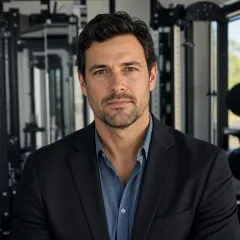
Marcus Feldman
Marcus Feldman is a commercial strength-equipment analyst covering selectorized machines, plate-loaded stations, Smith machines, functional trainers, power racks, benches, barbells, dumbbells, and cable systems. He applies ISO 20957-1 and ISO 20957-2 while comparing rated loads, stability, frame deflection, pulley ratios, cable travel, adjustment increments, guarding, entrapment points, fastener retention, and fatigue cycles. His guides help gym operators, coaches, facility planners, and procurement teams evaluate biomechanics, user capacity, floor layout, maintenance access, durability, and lifecycle value.