Operator Notes
Novomatic Equipment: A Cost Controller's Guide to Slots, Card Games, Video Games & Fitness Machines
There's no single best Novomatic setup. Anyone who says otherwise hasn't sat through a budget review after a bad equipment purchase.
I'm a procurement manager at a 38-person indoor entertainment company. I've managed our equipment budget—about $450,000 per year—for seven years, negotiated with 40+ vendors, and logged every order in our cost tracking system. My first mistake was assuming the lowest quote was the right quote. Three budget overruns later, I learned about total cost of ownership.
If you're trying to choose between novomatic slot machines, tabletop card games, a Wolverine video game cabinet, or fitness equipment, stop looking for one universal answer. It doesn't exist. In my experience, the right move depends on your license, your floor, and your maintenance capacity. I'll walk through four common situations and what I'd actually buy or lease in each.
If you run a casino or gaming hall
Slots are your core revenue. But don't put a cabinet on your floor just because the title is new. Ask for the demo/free-play version—European operators call these novomatic slot besplatne igre—and watch what your regulars do with it.
I don't have hard data on how well demo play predicts real coin drop, but after comparing trial performance with later floor results, my sense is that it's a decent proxy. If players don't keep coming back to the free version, they won't pay for it. And if a supplier won't let you test a game before a lease, that's a warning sign.
For online operators, you'll see novomatic online casino with no deposit bonus used as a marketing hook. Ignore the bonus wording when evaluating platform vendors. A no-deposit bonus is a marketing cost, not a technical feature. Check what's actually in the contract: game integration fees, RTP ranges, revenue share, certification, and how long it takes to add a new title. One operator I know chose a platform because of a flashy free-spins campaign, then discovered the integration fee for Novomatic games was $8,000 more than the competitor's. No one reads the fine print until the invoice arrives.
Also, if a salesperson tells you a machine offers guaranteed wins, end the conversation. Gaming machines are held to strict standards—GLI-11 is common in many regulated markets. Ask for the game certificate. If they can't produce it, don't let it on your floor.
If you run a family entertainment center or arcade
An FEC is not a casino. You're selling an afternoon, not a spin. That changes the math.
A licensed cabinet like a Wolverine video game can be a huge draw—fans recognize the character and parents will line up for it. But you're also buying a maintenance responsibility. Ask your distributor how long replacement parts take. If that Wolverine video game cabinet breaks and the repair board sits in a warehouse for four weeks, it's just an expensive piece of decor. Not ideal, but workable if you have a backup. Better yet, make the service contract part of the purchase negotiation, not an afterthought.
Don't overlook card games. The classic BS card game costs almost nothing, has no moving parts, and creates exactly the kind of noise that makes an FEC feel alive. It's not a direct revenue line unless you run tournaments or charge for table time, but it pulls people off their phones and into your food area. Dwell time is what drives your margins.
And if you've ever wondered how to make a card game for your own venue, the cost-controlled way is to start simple. Use standard decks, print a one-page rules sheet, and have a staff member run a mini tournament for two weeks. A prototype costs a few hours of labor. A custom-printed game that flops costs $300 to $2,000. Start with the cheap version, iterate, and only invest once you see repeat demand.
If you run a fitness-focused venue
Fitness equipment doesn't look like slot machines, but Novomatic's product line includes rowing machines, ellipticals, and cable machines. For a sports club, hotel gym, or recovery lounge, these can be more valuable per square foot than an arcade cabinet—they attract a membership-minded customer who comes back on a schedule.
The cost mistake I see here is buying on sticker price. A cheap cable machine might fail after 1,000 hours; a mid-range one might run 10,000. If you don't have a maintenance person on-site, the labor to fix the cheap unit will eat your savings. Check for EN 957 or ASTM compliance and get warranty terms in writing. Why do I focus on this? Because an injury or equipment failure can turn a $500 repair into a $5,000 liability. Prevention is always cheaper than the alternative.
If you run a bar, restaurant, or mixed-use venue
This is where I see the biggest mismatch between ambition and budget. Small venues try to replicate a casino floor with multiple slot cabinets and full-sized video machines. Please don't. You have limited floor space and even less maintenance muscle.
Instead, rotate: one or two Novomatic slot machines on revenue share, one licensed cabinet like that Wolverine video game, and a cheap card game table can cover multiple customer types without destroying your cash flow. Why revenue share? Because the distributor owns the maintenance. You don't want to be paying a $180 service call for a machine that earns $50 that month. To be fair, buying can make sense if you have a loyal regular crowd and a technician on staff. But for most bars, leasing or revenue share is the safer move.
How to know which situation you're in
Forget the labels. Ask yourself three questions:
- What do your customers actually do for 90 minutes? If they sit and play one game, a slot or video machine works. If they walk around and socialize, card games and interactive cabinets fit better.
- How much maintenance can you handle? A one-person management team shouldn't buy six complex machines. You'll be paychecks deep in repair calls.
- What can your cash flow absorb? If an unexpected $500 repair would hurt, choose lease or revenue share over purchase.
There's no shame in starting small. I've seen a bar with one slot machine and a deck of cards outperform a fancier competitor down the street, simply because the operator kept everything clean, working, and staffed.
Five minutes of verification beats five days of correction.
One final note: I learned this during our 2023–2025 budget cycles. Game licensing, distributor terms, and prices change fast—especially for online casino products. As of January 2025, this matches what I see on the market, but verify current quotes and compliance requirements before you sign anything. The 12-point checklist I built after my third mistake has saved us an estimated $8,000 in potential rework and service fees. That's the kind of prevention that pays for itself.
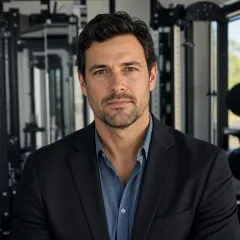
Marcus Feldman
Marcus Feldman is a commercial strength-equipment analyst covering selectorized machines, plate-loaded stations, Smith machines, functional trainers, power racks, benches, barbells, dumbbells, and cable systems. He applies ISO 20957-1 and ISO 20957-2 while comparing rated loads, stability, frame deflection, pulley ratios, cable travel, adjustment increments, guarding, entrapment points, fastener retention, and fatigue cycles. His guides help gym operators, coaches, facility planners, and procurement teams evaluate biomechanics, user capacity, floor layout, maintenance access, durability, and lifecycle value.