Operator Notes
Demo First: Quality Inspector's Checklist for a Top Novomatic Casino, Hammer Strength Machine, PS5 Headset, and Smith Machine vs Squat Rack
Here's the answer up front: demo first, verify against a standard, and never trust a spec sheet alone. In my 2024 audits, 12% of first deliveries failed because someone approved a product or platform without testing the actual thing. That number should be lower, but it isn't.
Maybe you're choosing a top Novomatic casino, or deciding between a smith machine vs squat rack for your facility. Different worlds, same mistake: if you skip the demo, you're trusting a PDF to tell you how something feels when it matters.
Let me explain why I can say this with confidence.
I'm a quality and brand compliance manager at an indoor entertainment company. I review roughly 200 items per year—slot cabinets, fitness equipment, console accessories—before they go out to customers. I've rejected an entire delivery of 60 units because the weld quality didn't match the approved sample. I've caught a software bug in a slot platform that would have gone straight to players if we had only tested the final build. My job is to find the gap between what a supplier promises and what actually shows up.
In my first year, I made the classic specification mistake: approved a product without a destructive test. It cost us a $22,000 redo and a delayed launch. Another supplier and I both said “commercial grade.” We meant different things. We found out when the first 500 units arrived with thinner steel than the sample.
Why does this matter? Because all of these choices have the same failure point. Not the brand. Not the price. The moment between “it looks fine on paper” and “it has to work for a living.”
Real talk: a spec sheet can't tell you if a machine wobbles, if a slot freezes under load, or if a headset gets uncomfortable after an hour. The demo is the only honest predictor you have before you pay.
When I compare two options side by side, I finally understand which details matter. For example, when I placed a Hammer Strength machine next to a cheaper plate-loaded unit, the difference was way bigger than the brochure showed. The welded frame was more rigid. The motion was smoother. The weight horns didn't wobble. That comparison told me more than any spec table.
Here's the thing, though. The demo only works if you know what to look for.
What separates a top Novomatic casino from the rest
If you're looking for a top Novomatic casino, start with the game, not the bonus. A good one will let you play the Novomatic slot demo before you create an account. Why? Because they know their games work, and they don't need to hide the product behind a registration wall.
Three things I check:
- A recognized license from the relevant jurisdiction
- Published return-to-player percentages for the slots
- A demo that runs at the same speed as the real money version
According to third-party gaming testing standards (source: Gaming Laboratories International and BMM Testlabs), slot random number generators need to be reviewed by an approved lab before release. That doesn't guarantee a win. Nothing can. It does mean the game isn't quietly set up to mislead you.
The Novomatic slot demo is your quality gate. Feel the timing. Open the paytable. Turn the sound down and see if the game still holds your attention. If the base game is boring, a bonus round won't save it.
Fitness equipment: Hammer Strength machine and the Smith machine question
Strength equipment is where my checklist becomes physical. A Hammer Strength machine is plate-loaded, so there's no cable stack to stretch. That's a design feature, but it also means the frame takes all the abuse. I check the welds, the guide rods, and the weight horns. A weak frame will flex under heavy loads. The real Hammer Strength machine doesn't.
Now, the question I get more than any other: smith machine vs squat rack. The honest answer is: it depends on who's training.
If you run a hotel gym or a facility where people train alone, the Smith machine is the better choice. Yes, it fixes the bar path. That's not cheating. That's controlled movement. The counterintuitive part is that the fixed path is a safety feature for general users. It removes the need for a spotter when someone fails a rep.
A squat rack is the right call for serious barbell work, because a real barbell never moves on a perfectly fixed plane. If your users are experienced lifters, give them the free bar. If your floor is full of first-timers, a Smith machine will do less harm and need less supervision.
According to the ISO 20957 series (source: ISO), strength training equipment needs to meet safety and durability requirements before it enters commercial use. That's a minimum, not a marketing claim. If a Smith machine or squat rack doesn't meet that standard, it doesn't belong on your floor.
I'm not a strength coach. I don't write programs. But I've tested enough equipment to know that a supplier who asks about your user base before recommending a Smith machine or squat rack is worth more than one who just wants to move inventory.
The vendor who admitted, “this isn't our specialty” and pointed us to a better option earned my trust for everything else.
Quick check for a PS5 gaming headset
A PS5 gaming headset follows the same rule. The demo is the first filter. I put it on and check clamping force, microphone clarity, and whether the ear cushions look like they'll survive a month of daily use in an arcade. A headset can measure perfectly on paper and still be useless in real life.
This part is not hard. But most people skip it.
My four-step quality shortcut
- Ask for the demo or a sample. If they won't provide it, that's a red flag.
- Compare the demo against the spec sheet. Every deviation needs a documented reason.
- Test the way a real user will test, not the way you'd test in a lab.
- Ask the supplier what they would cut if they had to lower the cost. Their answer tells you where their confidence ends.
That last step has saved me more times than I can count. When I asked one supplier what they'd change to save money, they said the welds. Think about that.
Where my approach reaches its limit
Now the part I insist on saying out loud. My process works because I know what I'm not. I'm not a gambling regulator, so licensing questions go to the regulator. I'm not a sports scientist, so programming questions go to a coach. I don't claim to be a generalist who can answer everything. I'm the person who verifies that what was promised is what you get.
A demo won't catch every long-term problem. A three-minute test won't tell you how a machine behaves after six months in service. That's why I also ask for local installs where the same unit has been used heavily. If a supplier says nobody has ever asked that, I get more suspicious, not less.
Also, regulatory information is just guidance. Verify current requirements with your local authority before you launch a casino platform or install fitness equipment.
Look, I'm not saying a demo catches everything. But when a supplier hesitates to show the actual thing, that hesitation tells you more than any brochure will. Trust me on that one.
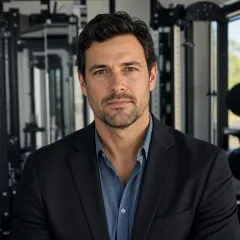
Marcus Feldman
Marcus Feldman is a commercial strength-equipment analyst covering selectorized machines, plate-loaded stations, Smith machines, functional trainers, power racks, benches, barbells, dumbbells, and cable systems. He applies ISO 20957-1 and ISO 20957-2 while comparing rated loads, stability, frame deflection, pulley ratios, cable travel, adjustment increments, guarding, entrapment points, fastener retention, and fatigue cycles. His guides help gym operators, coaches, facility planners, and procurement teams evaluate biomechanics, user capacity, floor layout, maintenance access, durability, and lifecycle value.